

There’s a natural instinct when investing in a home addition to think in terms of scale. More square footage. Larger rooms. Higher ceilings. Expanded views. But the homes that feel truly elevated are rarely defined by size alone. They’re defined by how seamlessly one space moves into the next, how comfortably daily life unfolds within them, and how intelligently each square foot performs. In this post, we’ll look at how to create a home addition that feels effortless, intuitive and luxurious.
Why Bigger Isn’t Always Better in a Home Addition
In affluent neighborhoods especially, it’s easy to equate square footage with value, for example, through a larger kitchen, a grander family room or a more expansive primary suite. However, while added space can enhance a home, size by itself does not guarantee better living.
What ultimately determines satisfaction in a home addition is how the new space integrates with the existing home. Interior flow in home design includes sightlines, circulation paths and functional zoning—all which play a far greater role in long-term comfort.
A 600-square-foot addition that connects beautifully, preserves architectural rhythm and supports your daily routine will outperform a 1,000-square-foot addition that feels disconnected or awkward. That’s why thoughtful home addition layout planning matters so much.
Smart design-build home additions focus first on how spaces connect and perform; therefore, square footage becomes a response to lifestyle needs—not the starting point.
What “Interior Flow” Really Means in Residential Design
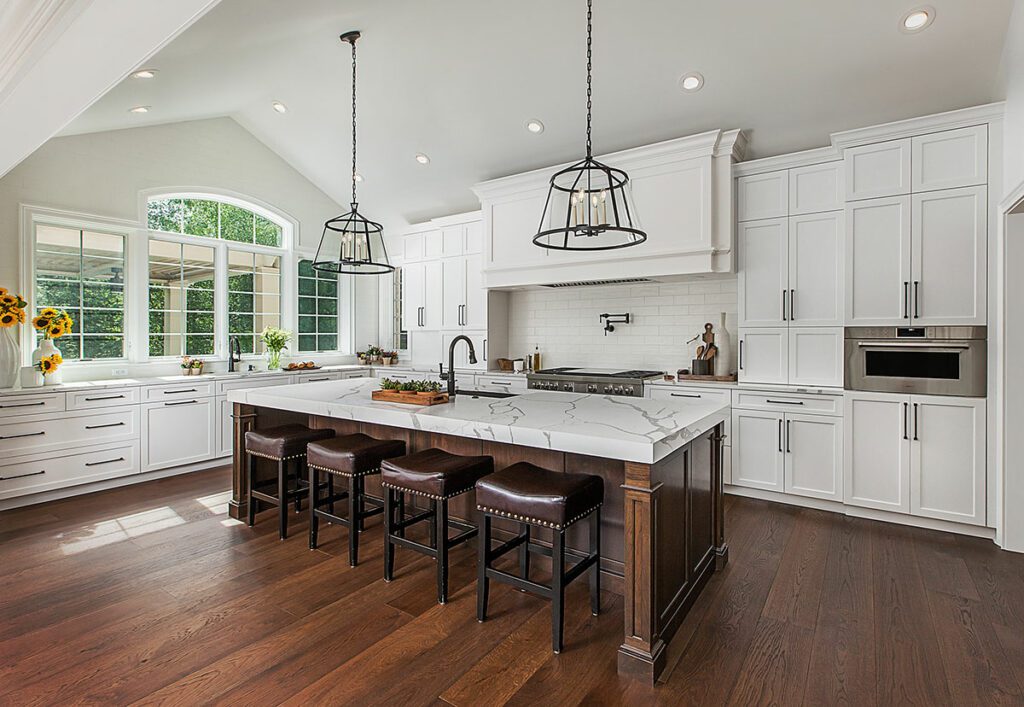
Interior flow refers to how people move visually and physically through a home. It includes:
- Movement paths between rooms
- Visual continuity across sightlines
- Adjacency planning (which spaces sit next to each other)
- Overall usability
There is also an important distinction between circulation space and usable living space. Hallways, transitional zones and walking paths are necessary, but when they dominate the layout or are inefficient, they consume square footage without adding lifestyle value.
Poor interior flow in home design can create subtle friction. You may not consciously recognize the issue, but you feel it in things like:
- A kitchen that requires crossing the entire room to reach the pantry
- A family room cut off from outdoor entertaining
- A mudroom that doesn’t align with how you actually enter the home
Effective space planning for additions ensures movement that feels natural, not imposed.
“When I review addition plans, I’m not just looking at room sizes; I’m tracing how someone walks through the space,” says Marcelle Beneteau, Architectural Designer at MainStreet Design Build. “If the path feels forced or interrupted, the design needs refinement before we ever talk about adding square footage.”
The Hidden Cost of Adding Space Without Improving Layout
When layout isn’t addressed first, homeowners often compensate by requesting more space. But additional square footage layered onto a flawed plan only amplifies inefficiencies.
Common outcomes can include:
- Oversized but disconnected rooms
- Long, inefficient travel paths
- Wasted transitional areas
- Mechanical and structural inefficiencies
- Furnishing challenges that compromise usability
In a functional home addition, every square foot works intentionally.
“We’ve seen homeowners request large additions when the real problem was layout. Once we reworked circulation and room relationships, they often needed less space—and got a better result,” says Doug Klee, President of MainStreet Design Build.

An example is this Bloomfield Hills room addition. Rather than expanding the footprint, our design team focused on strengthening the connection between existing and new spaces. By improving adjacencies and aligning circulation routes, the addition enhances daily living without unnecessary space.
Key Flow Principles That Make Additions Feel Natural
Additions that feel seamless follow a set of guiding design principles. These aren’t stylistic decisions alone; they are structural and experiential.
- Clear circulation routes: Primary pathways should feel intuitive. You should never need to navigate around furniture or cut awkwardly through secondary zones to reach key spaces.
- Functional adjacencies: Spaces that are used together should sit together. Kitchens should connect to dining areas; mudrooms should align with garage entries; outdoor living areas should relate to gathering spaces.
- Sightline planning: What you see from one room to the shapes how spacious and connected your home feels. Strategic openings, ceiling alignments and focal points preserve visual continuity.
- Threshold transitions between old and new spaces: Changes in flooring, ceiling height or trim must be intentional. Abrupt material shifts can make an addition feel like an afterthought.
- Proportion and scale alignment: The new space must respect the architecture of the existing home.
“Interior flow is also visual. Materials, lighting and ceiling treatments guide people through a space without them ever realizing it. When the shift finishes too abruptly, the addition can feel disconnected,” explains Amy Fischer, Interior Designer.

This two-story addition in Birmingham near Quarton Lake exemplifies these principles. Instead of creating a dramatic stylistic departure, our design team ensured this addition echoes the home’s proportions and detailing. Movement between levels and across gathering spaces feels intentional.
How Design-Build Teams Evaluate Flow Before Square Footage
Design-build firms approach additions differently than traditional design-bid-build models. Because architecture, interior design and construction collaborate from the outset in the design-build model, flow can be analyzed comprehensively before any dimensions are finalized.
The evaluation process often includes:
- Lifestyle interviews and use-case mapping to learn how the home will be used
- Bubble diagrams and adjacency studies
- Circulation path overlays
- Furniture planning before wall placement
- 3D walk-through modeling
In a successful home addition, behavior informs the blueprint.
“We start with how our clients live day to day—with groceries, guests, kids, pets, routines, etc.,” says Danielle Klee, Chief Strategy Officer. “Strategy comes before size. When we map behavior first, the right square footage usually reveals itself.”

In this Birmingham kitchen, mudroom and laundry addition, instead of enlarging each space independently, our team studied how the homeowners transitioned from car to kitchen, how storage functioned, and how entertaining flowed. By resolving circulation first, the finished addition feels efficient and quietly luxurious.
Operational Efficiency: Flow Impacts Construction Too
Interior flow isn’t only about lifestyle. It also impacts how smoothly a project is executed. When layout decisions are thoughtful and coordinated early, construction becomes more predictable and efficient.
Flow-driven planning supports:
- Clear structural tie-ins and load paths
- Efficient mechanical routing
- Reduced changes in the field
- Minimized rework
- Smoother scheduling from coordinated layout decisions
When done correctly, space planning enhances both experience and efficiency.
“From an operations standpoint, a well-planned layout reduces field changes and coordination issues. Better flow on paper usually means smoother execution on site,” says Kim McDevitt, Chief Operations Manager.

This English Cotswold-inspired room addition in Birmingham illustrates this point. Because circulation, ceiling heights and structural transitions were resolved in the design phase, the homeowners benefitted from a well-coordinated build process. The result is a graceful architectural extension.
Signs Your Addition Needs Better Flow—Not More Size
If you’re considering expanding your home, it’s worth evaluating whether the issue is square footage—or circulation.
Common indicators that flow may be the real problem include:
- Bottlenecks between frequently-used rooms
- Dead-end spaces that limit movement
- Oversized rooms that feel underutilized
- Awkward or abrupt entries into new areas
- Furniture placement conflicts that block pathways
Often, resolving these concerns throughout layout refinement creates a more dramatic improvement than simply enlarging the home’s footprint.
Design for Movement First, Then Measure the Space
The most successful home additions feel seamless because they were designed around movement, daily routines and adjacency—not ego or excess. When circulation paths are clear, when rooms relate intuitively, and when transitions feel cohesive, a home gains elegance and efficiency without unnecessary space.
Functional home additions are not about how much space you add; they’re about how intelligently that space performs. By prioritizing interior flow in home design and thoughtful space planning for additions, homeowners achieve results that feel natural and enduring.
Choose MainStreet Design Build
If you’re considering a home addition, start with strategy, not square footage. Our team at MainStreet Design Build approaches every project through an integrated design-build planning process where architecture, interior design and construction collaborate from the very beginning. This alignment allows us to evaluate interior flow, structure, mechanical systems and lifestyle needs simultaneously—long before construction begins—to reduce surprises and elevate the outcome.
When planning, budgeting and execution are unified under one team, design-build home addition decisions are smarter, transitions are smoother and your finished space feels intentional in every detail.
Let’s design a home addition that fits beautifully with the way you live. Contact us to begin the conversation.
To get more tips and inspiration for your remodel, sign up for our newsletter.

