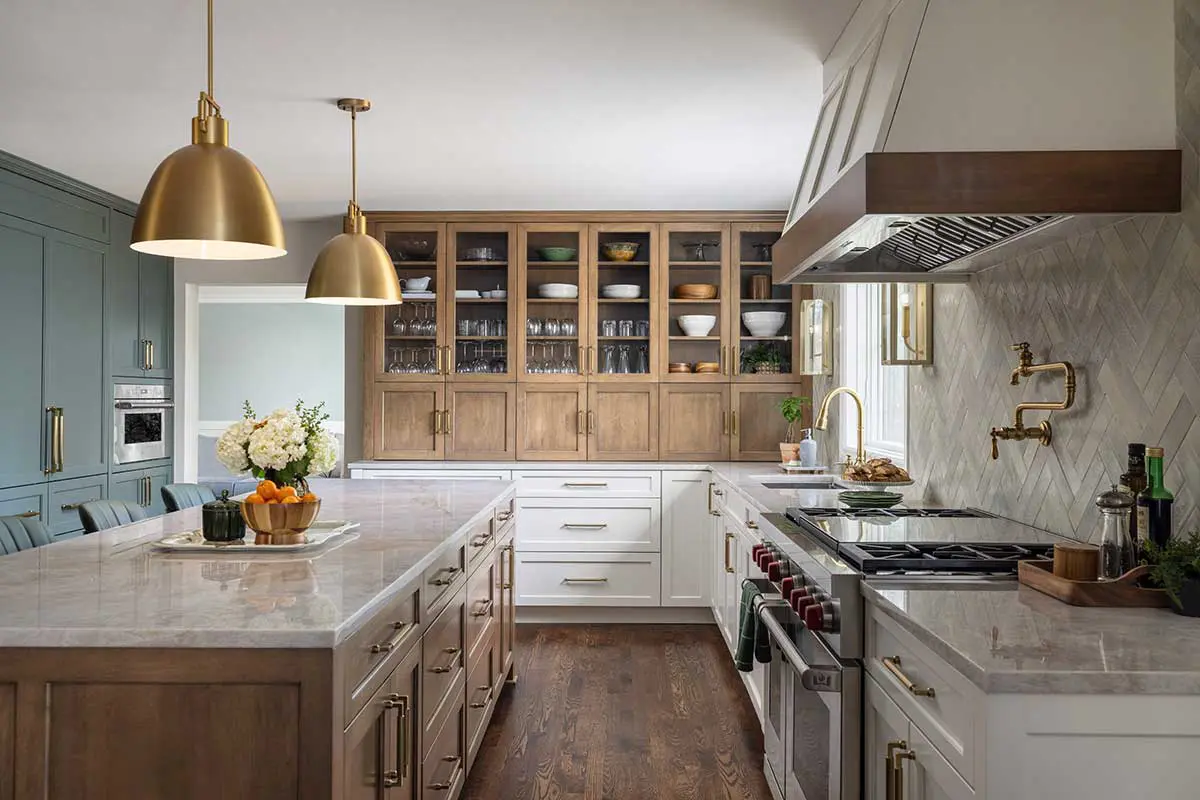
L-Shaped Kitchen Layouts
One of the most timeless and ergonomic kitchen layouts available today, the L-shaped kitchen layout combines effortless functionality with sleek, sophisticated design. Discover how this layout best serves your daily kitchen needs and whether it’s the right fit for your remodeling project in Michigan.
Start planning your home remodel today
What is an L-Shaped Kitchen Design?
The L-shaped kitchen layout is formed by two adjacent countertops and cabinetry meeting at a right angle to form an L-shape. This layout leaves the remaining sides open, creating a social, interactive environment with the surrounding areas. To optimize the L-shaped layout to your needs, you can do the following:
Step 1: Plan the Work Triangle (Sink, Stove, Fridge)
The kitchen triangle is the workflow between the zones for preparing, cooking, and storing food, which are the sink, stove, and refrigerator. For an optimal work triangle, position the zones about 4 and 9 feet apart. A typical arrangement places the sink in the center of one leg of the “L,” with the refrigerator at one end and the stove at the opposite side.
Step 2: Optimize the Corner Cabinet
One of the most common design challenges in L-shaped kitchens is managing that tricky corner cabinet space. Rather than letting it become a dark, unused zone, consider installing a carousel (lazy Susan) unit, corner drawers, or pull-out shelving systems.
Step 3: Add a Central Island
To enhance functionality and increase your kitchen’s value, consider incorporating a kitchen island for L-shaped kitchens. An island provides extra seating, counter space, and storage, making it a perfect gathering spot for families or when entertaining guests.
Small L-Shaped Kitchen Ideas
Designing a small L-shaped kitchen in Michigan is all about maximizing space without compromising on style or function. With the right approach, even compact L-shaped kitchen layouts can feel open, luxurious, and incredibly efficient.
If you wish to add a small L-shaped kitchen island to the space, consider a movable one. A rolling kitchen island offers spatial flexibility and additional workspace without congesting the kitchen’s foot traffic.
- Allow for Seamless Circulation: Ensure a clear walkway of at least 1.2 meters between your island and countertops to prevent workflow congestion.
- Use Compact or Multifunctional Appliances: Consider under-counter refrigerators or combination ovens to free up valuable surface area. The tops of these appliances can serve double duty as additional counter space for food prep or small kitchenware.
- Design with Smart Storage in Mind: Every inch matters. For instance, you can transform the narrow space between your refrigerator and cabinets into a pull-out spice rack.
- Incorporate Open Shelving: Replacing upper cabinets with open shelves creates a light, airy ambiance while keeping essentials within reach.
- Brighten with a Light-Toned Palette: Choosing light-colored cabinetry, whether monochromatic or in a subtle two-tone design, enhances the feeling of spaciousness. Pair these tones with reflective backsplash materials or under-cabinet lighting to add depth and brightness to your L-shaped kitchen.
L-Shaped Kitchen Island Options
A thoughtfully designed kitchen island can dramatically enhance the functionality and elegance of your L-shaped kitchen layout. Are you looking forward to more storage space or additional countertop work areas? Then, here are some kitchen island options to consider. Each one is designed to complement the natural flow of an L-shaped kitchen while reflecting your personal style and daily needs.
- Waterfall Countertops: Bring modern sophistication to the heart of your kitchen with a waterfall countertop. Featuring a seamless drop along the sides of the island, this design showcases luxurious materials such as granite or quartz and conceals base cabinets for a clean, sculptural look.
- Kitchen Island with a Sink: For families or couples who cook together, adding a sink to the island supports a smooth, collaborative workflow. Kitchen islands with their own sinks allow you to create multiple work triangles within your kitchen layout.
- Tiered Island: A tiered kitchen island provides a clear division of different zones on its surface. For instance, the upper level can serve as a prep area, while the lower level can be a dedicated space for dining or helping your child with homework.
- Rolling Island Cart: Ideal for small L-shaped kitchens, these mobile islands offer extra countertop space and storage while keeping the kitchen layout open and adaptable
- L-shaped Island: An L-shaped island mirrors the main layout, offering extended counter space and additional seating. This unique solution fosters social interaction and adds architectural interest to your kitchen floor plan.
- Kitchen Island with a Stovetop: Create a unique yet effective kitchen triangle by placing the stovetop on an island. Placing the cooking zone on the island allows you to engage with your family and guests while preparing meals.
Are you wondering whether you should opt for a kitchen island or not for your L-shaped kitchen layout? Here are the pros and cons to help you further with your decision.
L-Shaped Kitchen with Island
L-Shaped Kitchen without Island
Workflow & Movement
Enhances the kitchen work triangle by adding a central cooking, prep, or sink zone; ideal for multi-tasking.
Offers direct, unobstructed access between sink, stove, and refrigerator, maintaining an efficient L-shaped layout.
Storage Options
Adds extra cabinets, drawers, and possibly open shelving beneath the island—great for concealed kitchen appliances or pantry items.
Relies solely on corner cabinets and wall-mounted storage, which may limit organization in small L-shaped kitchen layouts.
Seating & Socializing
Accommodates bar stools or dining seating; perfect for casual meals or engaging with family while cooking.
Open space may flow more naturally into adjoining rooms, maintaining an airy feel in open concept floor plans.
Space Requirements
Requires ample room between island and countertops (at least 1.2 meters) for smooth movement. Best for medium to large L-shaped kitchens.
Ideal for small kitchens or tighter floor plans where space must be used efficiently.
Design Flexibility
Customizable with waterfall countertops, tiered surfaces, or a stovetop to match your lifestyle and design preferences.
Keeps the layout minimal and clean, ideal for modern kitchen designs or two-tone cabinetry that showcases elegance in simplicity.
Visual Impact
Creates a central visual anchor—especially effective in L-shaped kitchen remodels with luxury finishes like quartz countertops or statement lighting.
Allows for a more open visual line across the room, ideal if you want your backsplash, cabinetry, or statement flooring to stand out.
Hear From Happy Homeowners
Hear from happy homeowners in Michigan who have partnered with us into elevating their kitchens that match their evolving needs, lifestyle, and personal taste.
“This was our first time using a contractor for a major renovation – Kitchen, Family Room and Bathrooms. The Mainstreet Design Build staff, led by Steve and Christine were extremely professional throughout the project. They walked us through the process step by step and made sure that everything was completed to our satisfaction – from initial planning and budgeting to the final details. The work was completed to a very high quality and the crew were always respectful of our home and mindful to keep the job site as safe and tidy as possible throughout. The end result is great and has exceeded our expectations. We have no hesitation in recommending Mainstreet Design Build and would absolutely use them again.”
“We were novices when it came to a home remodeling project and the team members at Mainstreet Design Build were very patient with us throughout the process. The quality of work and attention to detail is unsurpassed. Our questions were responded to promptly and thoroughly. The team was creative in finding solutions to the few issues that arose. The communication from beginning to end was tremendous. Every team member we encountered worked with the utmost pride in their work and professionalism. The projected time frame for the project was long (~3 months), but the project was completed in exactly the time frame proposed. We could not be happier. Thank you to everyone at Mainstreet!”
L-Shaped Layout FAQs
When homeowners approach us, they usually have similar questions when remodeling their kitchen layout into an L-shaped one. See the questions to learn more.
Q: What is the ideal size for an L-shaped kitchen?
A: An L-shaped kitchen layout is highly adaptable to various home sizes, but a typical layout is approximately 111 square feet (or 10.3 square meters). The long leg of the “L” usually ranges from 8 to 13 feet (2.4 to 4 meters), while the shorter leg typically spans 3 to 9 feet (0.9 to 2.7 meters). Whether you’re designing a small L-shaped kitchen or an expansive open-concept space, the layout should be tailored to fit your floor plan and lifestyle.
Q: What is the recommended clearance in front of an L-shaped kitchen?
A: To ensure smooth traffic flow and easy access to appliances like refrigerators, stovetops, and dishwashers, we recommend maintaining a clearance width of 4 to 6 feet (1.2 to 1.8 meters) in front of your kitchen cabinets and workspaces. This is especially important in L-shaped kitchen layouts with islands, where maintaining openness is key to functionality.
Q: Where should appliances be placed in an L-shaped kitchen?
A: For optimal function and an efficient kitchen work triangle, place your refrigerator and oven along the longer leg of the “L,” while the sink and dishwasher typically reside along the shorter side. This arrangement supports smooth transitions between cooking, prepping, and cleaning that makes your L-shaped kitchen as practical as it is stylish.
Q: What are the pros and cons of an L-shaped kitchen layout?
Pros:
- Improved traffic flow thanks to the open design.
- Seamless integration with adjacent living or dining areas in open concept floor plans.
- Supports an efficient work triangle for food prep, cooking, and cleanup.
- Works well with a kitchen island to create additional prep space, storage, and seating.
Cons:
- If not carefully planned, the work triangle can become too spread out, reducing efficiency.
- Corner cabinets can create dead space unless optimized with custom storage solutions, such as pull-outs or carousel units.
- May feel sparse without a central island, especially in larger layouts.
Browse Our Kitchen Design Resources
Discover more about kitchen layouts and other ways to upgrade your kitchen’s comfort, aesthetics, and value.
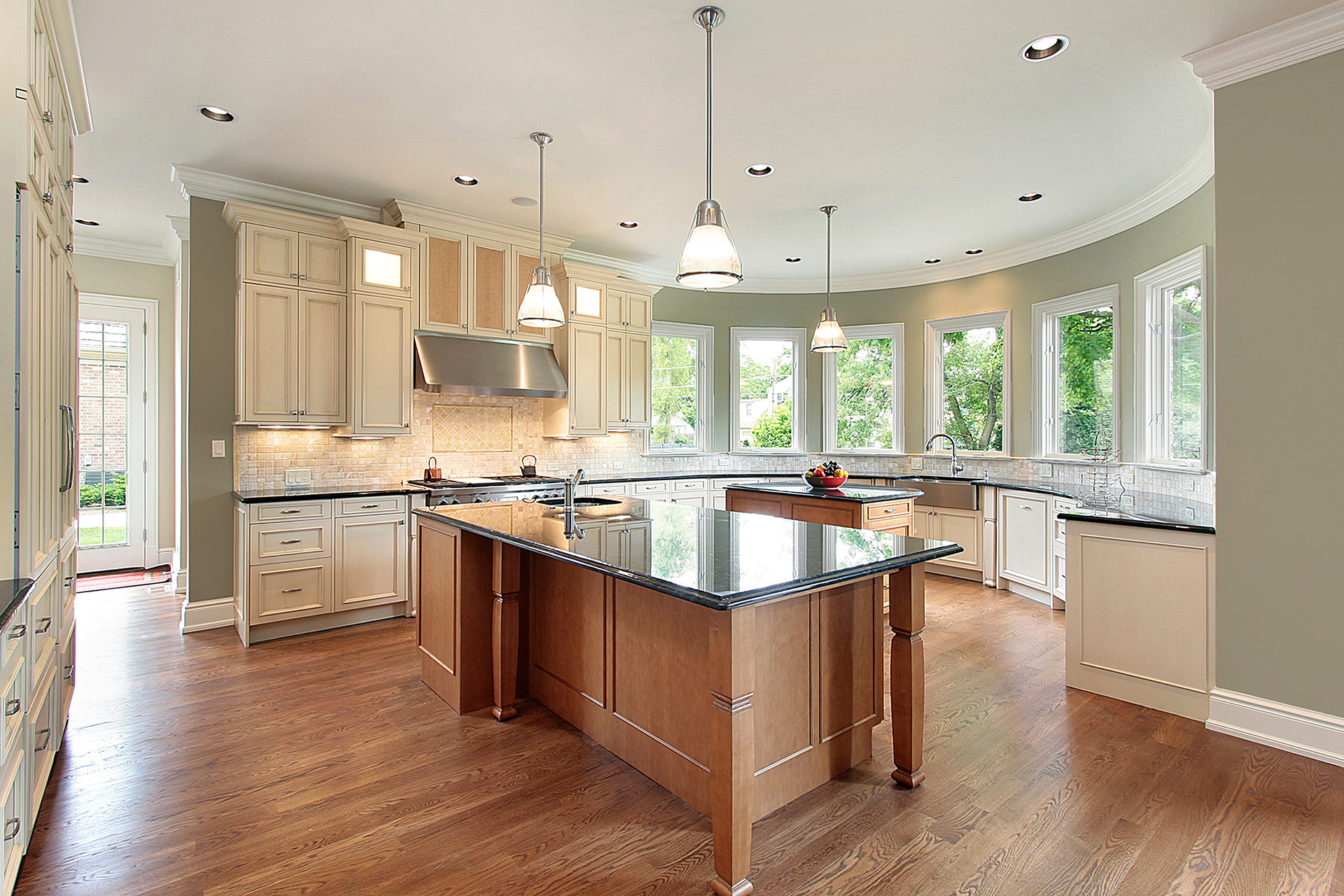
2026 Kitchen Design Trends Every Michigan Homeowner Should Know
this year’s kitchen design trends can guide you on the proven ways of elevating its comfort, function, and value.

Skip the Move — How a Custom Kitchen Addition Can Create Your “Next Home” in Place
Take a look at how a remodel can create your “next home” right where you are in this article.

Expert Tips: Where to Splurge and Where to Save in Your Kitchen Remodel
Expand your space and elevate your lifestyle with expert kitchen additions, from bump-outs to sunroom extensions.
Design Your L-Shaped Kitchen
Bring your vision into a draft using our interactive L-shaped kitchen layout design tool below. Through this tool, you can map out your ideal kitchen layout with clarity and creativity.